Current research areas
Cognitive interpretability of AI
How can we develop a scientific framework for understanding the cognitive capabilities and limitations of AI systems, especially large language models?
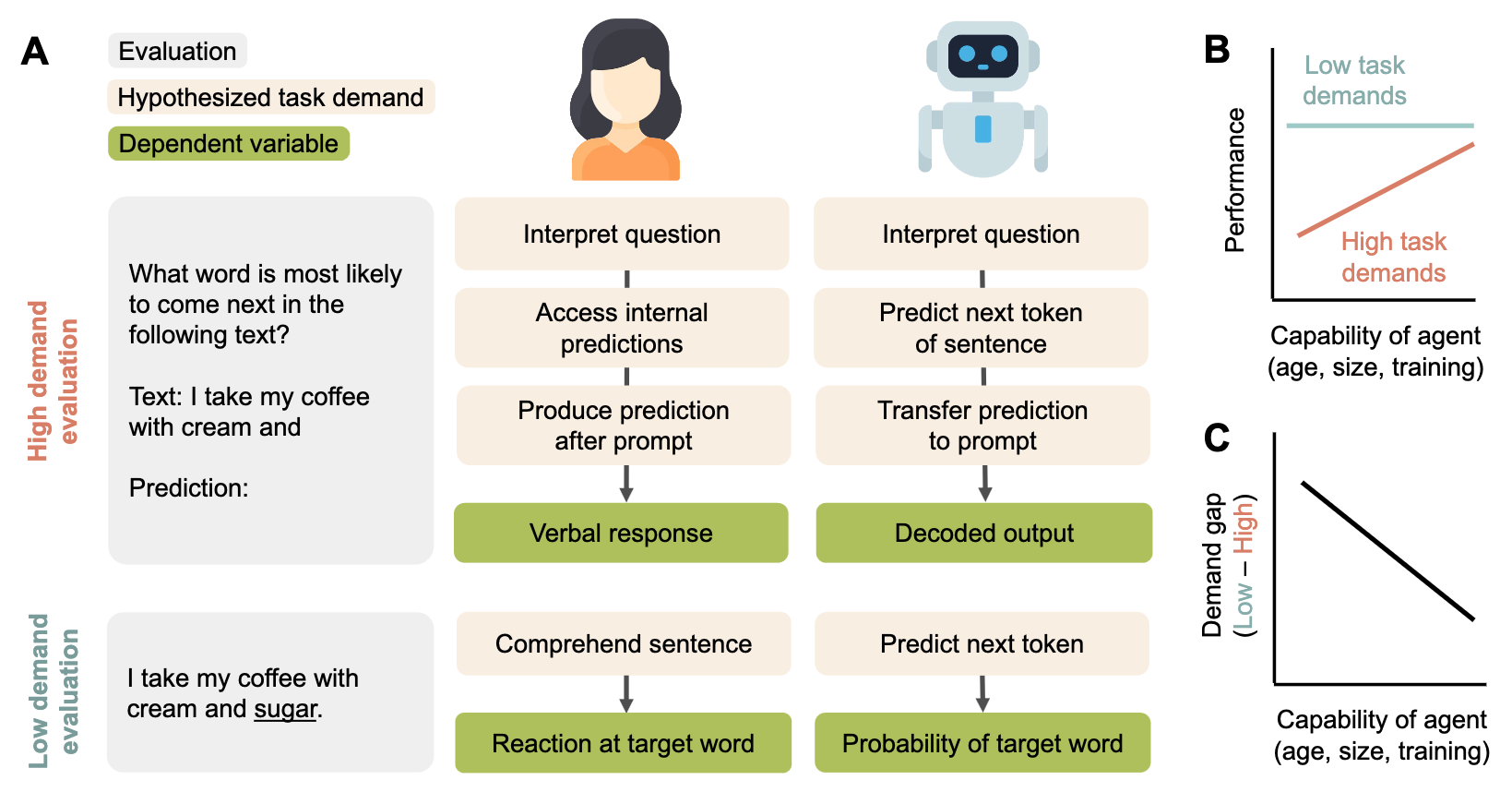
Hu, J., & Frank, M. (2024). Auxiliary task demands mask the capabilities of smaller language models. COLM. https://openreview.net/forum?id=U5BUzSn4tD
Hu, J., Mahowald, K., Lupyan, G., Ivanova, A., & Levy, R. (2024). Language models align with human judgments on key grammatical constructions. PNAS. https://doi.org/10.1073/pnas.2400917121
Hu, J., & Levy, R. (2023). Prompting is not a substitute for probability measurements in large language models. EMNLP. https://doi.org/10.18653/v1/2023.emnlp-main.306
Hu, J., Mahowald, K., Lupyan, G., Ivanova, A., & Levy, R. (2024). Language models align with human judgments on key grammatical constructions. PNAS. https://doi.org/10.1073/pnas.2400917121
Hu, J., & Levy, R. (2023). Prompting is not a substitute for probability measurements in large language models. EMNLP. https://doi.org/10.18653/v1/2023.emnlp-main.306
Pragmatic communication
How do people reason about other agents to convey meaning beyond what is literally said? How does communication relate to social intelligence more broadly?
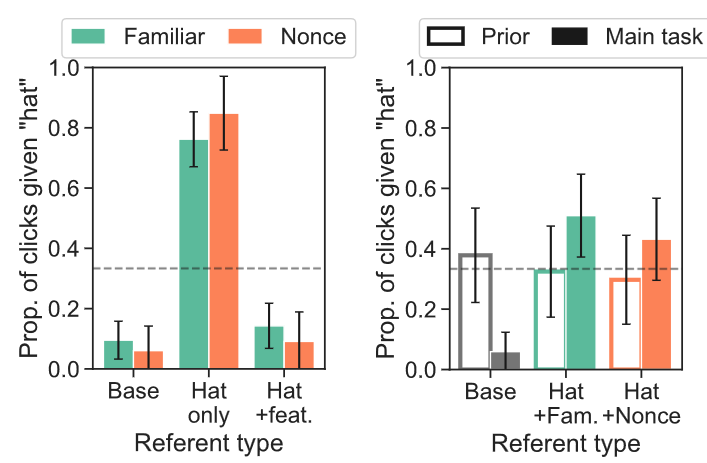
Tsvilodub, P., Klumpp, J.-F., Mohammadpour, A., Hu, J., & Franke, M. (2026). On Emergent Social World Models - Evidence for Functional Integration of Theory of Mind and Pragmatic Reasoning in Language Models. ACL. https://arxiv.org/abs/2602.10298
Hu, J., Floyd, S., Jouravlev, O., Fedorenko, E., & Gibson, E. (2023). A fine-grained comparison of pragmatic language understanding in humans and language models. ACL. https://aclanthology.org/2023.acl-long.230
Hu, J., Levy, R., Degen, J., & Schuster, S. (2023). Expectations over Unspoken Alternatives Predict Pragmatic Inferences. TACL. https://doi.org/10.1162/tacl_a_00579
Zaslavsky, N., Hu, J., & Levy, R. P. (2021). A Rate-Distortion view of human pragmatic reasoning. SCiL. https://aclanthology.org/2021.scil-1.32
Hu, J., Floyd, S., Jouravlev, O., Fedorenko, E., & Gibson, E. (2023). A fine-grained comparison of pragmatic language understanding in humans and language models. ACL. https://aclanthology.org/2023.acl-long.230
Hu, J., Levy, R., Degen, J., & Schuster, S. (2023). Expectations over Unspoken Alternatives Predict Pragmatic Inferences. TACL. https://doi.org/10.1162/tacl_a_00579
Zaslavsky, N., Hu, J., & Levy, R. P. (2021). A Rate-Distortion view of human pragmatic reasoning. SCiL. https://aclanthology.org/2021.scil-1.32
Learning from language
What forms of knowledge can be learned through experience with language? What kinds of input data, learning objectives, and inductive biases support the acquisition of linguistic knowledge?
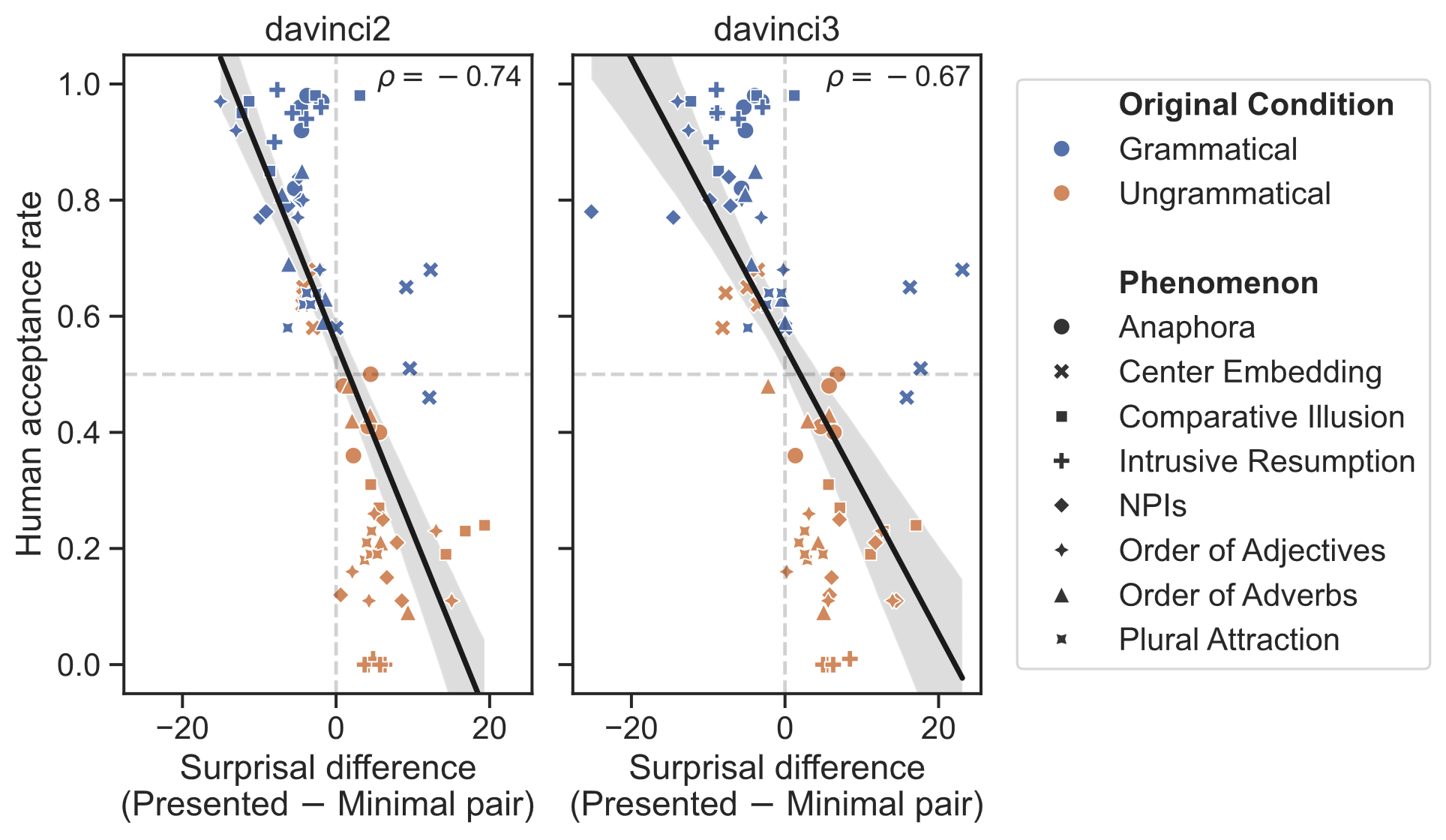
Hu, J., Wilcox, E. G., Song, S., Mahowald, K., & Levy, R. P. (2026). What Can String Probability Tell Us About Grammaticality? TACL. https://doi.org/10.1162/TACL.a.611
Ivanova, A. A., Sathe, A., Lipkin, B., Kumar, U. U., Radkani, S., Clark, T. H., Kauf, C., Hu, J., Pramod, R. T., Grand, G., Paulun, V. C., Ryskina, M., Akyürek, E., Wilcox, E. G., Rashid, N., Choshen, L., Levy, R., Fedorenko, E., Tenenbaum, J., & Andreas, J. (2025). Elements of World Knowledge (EWoK): A Cognition-Inspired Framework for Evaluating Basic World Knowledge in Language Models. TACL. https://doi.org/10.1162/TACL.a.38
Hu, J., Gauthier, J., Qian, P., Wilcox, E., & Levy, R. (2020). A Systematic Assessment of Syntactic Generalization in Neural Language Models. ACL. https://doi.org/10.18653/v1/2020.acl-main.158
Ivanova, A. A., Sathe, A., Lipkin, B., Kumar, U. U., Radkani, S., Clark, T. H., Kauf, C., Hu, J., Pramod, R. T., Grand, G., Paulun, V. C., Ryskina, M., Akyürek, E., Wilcox, E. G., Rashid, N., Choshen, L., Levy, R., Fedorenko, E., Tenenbaum, J., & Andreas, J. (2025). Elements of World Knowledge (EWoK): A Cognition-Inspired Framework for Evaluating Basic World Knowledge in Language Models. TACL. https://doi.org/10.1162/TACL.a.38
Hu, J., Gauthier, J., Qian, P., Wilcox, E., & Levy, R. (2020). A Systematic Assessment of Syntactic Generalization in Neural Language Models. ACL. https://doi.org/10.18653/v1/2020.acl-main.158
AI metacognition
What would it mean for an artificial model to regulate, monitor, or report on its internal states? How can we design evaluations that rigorously measure these abilities?
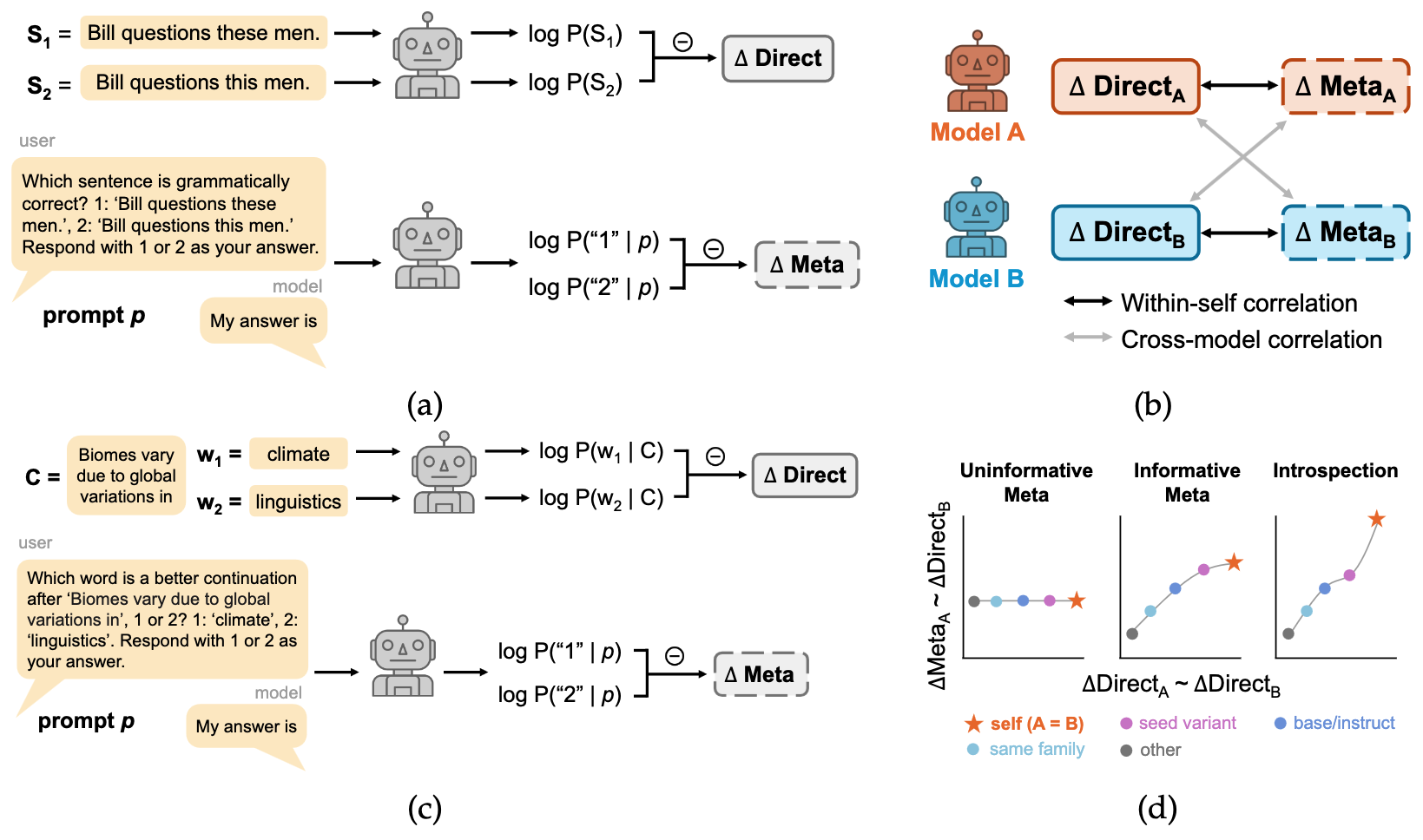
Song, S., Hu, J., & Mahowald, K. (2025). Language Models Fail to Introspect About Their Knowledge of Language. COLM. https://openreview.net/forum?id=AivRDOFi5H
Song, S., Lederman, H., Hu, J., & Mahowald, K. (2025). Privileged Self-Access Matters for Introspection in AI. arXiv. https://arxiv.org/abs/2508.14802
Song, S., Lederman, H., Hu, J., & Mahowald, K. (2025). Privileged Self-Access Matters for Introspection in AI. arXiv. https://arxiv.org/abs/2508.14802